Summary of "Childhood Exanthems (rash)"
Summary of Video: Childhood Exanthems (Rash)
This educational video covers the main childhood exanthems—widespread rashes seen in pediatric patients—and focuses on their clinical features, causative pathogens, progression patterns, and high-yield exam clues. It provides helpful mnemonics and emphasizes recognizing specific “buzzwords,” timelines, and rash distributions to differentiate between similar-appearing rashes.
Main Childhood Exanthems Covered
1. Fifth Disease (Erythema Infectiosum)
- Pathogen: Parvovirus B19
- Key Features:
- “Slapped cheek” rash: bright red, maculopapular, confluent, lace-like rash on bilateral cheeks.
- Rash spreads from cheeks to trunk and extremities.
- May be associated with arthritis.
- Initial nonspecific cold symptoms precede rash.
-
Mnemonic: “Fifth disease = 5 fingers on a hand = slap on cheeks” and arthritis reminder (“don’t slap too hard or you get arthritis”).
-
High-Yield Exam Points: Slapped cheek appearance, arthritis association, caused by parvovirus B19.
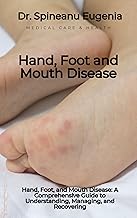
2. Hand, Foot, and Mouth Disease (HFM)
- Pathogen: Coxsackievirus A
- Key Features:
- Maculovesicular lesions on palms, soles, and oral mucosa.
- Often associated with stomatitis (lip inflammation).
- Rash appears ~48 hours after fever onset.
- Usually limited to hands, feet, and mouth.
- Mnemonic: None needed; name describes lesion locations.
- High-Yield Exam Points: Lesions on hand, foot, and mouth; caused by Coxsackievirus A.
3. Roseola (Exanthem Subitum / Sixth Disease)
- Pathogen: Human Herpesvirus 6 (HHV-6)
- Key Features:
- High fever lasting 3-5 days, then fever abruptly breaks.
- Followed by a maculopapular rash starting on the trunk, spreading to face and extremities.
- May have Nagayama spots (red spots on uvula and soft palate).
-
Mnemonic: “Roseola = rose petals fall off after 3-5 days” to remember fever duration and rash timing.
-
High-Yield Exam Points: Fever for 3-5 days, then rash; rash starts on trunk; caused by HHV-6.
4. Measles (Rubeola)
- Pathogen: Measles virus
- Key Features:
- Maculopapular rash starting on face, spreading downward.
- Associated with the “3 Cs”: Cough, Conjunctivitis, Coryza.
- Koplik spots (small white spots on buccal mucosa) are pathognomonic.
- Can be complicated by pneumonia.
- Vitamin A is given as treatment to reduce severity.
-
Mnemonic: “Measles = muscles marinara” (marinara = red spots in mouth) to remember Koplik spots and rash starting on face.
-
High-Yield Exam Points: Koplik spots, 3 Cs, vitamin A treatment.
5. Rubella (German Measles)
- Pathogen: Rubella virus
- Key Features:
- Maculopapular rash starts behind the ears (postauricular) and spreads downward.
- Postauricular and suboccipital lymphadenopathy.
- May have Forchheimer spots (soft palate petechiae).
- Rash may be desquamative (peeling).
-
Mnemonic: “Rubella = ‘hello hello’ phone behind ear” to remember rash and lymphadenopathy behind ears.
-
High-Yield Exam Points: Rash starts behind ears, lymphadenopathy postauricular/suboccipital, Forchheimer spots.
6. Scarlet Fever
- Pathogen: Streptococcus pyogenes (Group A strep)
- Key Features:
- Sandpaper-like, maculopapular rash starting on neck, spreading outward.
- “Pastia’s lines” (linear petechiae in skin folds like groin, axilla, elbows).
- Strawberry tongue.
- Sudden onset of rash and fever (bacterial infections tend to be acute).
-
Mnemonic: “Pastia’s lines = pasta noodles” to remember linear petechiae.
-
High-Yield Exam Points: Sandpaper rash, Pastia’s lines, strawberry tongue, sudden onset.
7. Chickenpox (Varicella)
- Pathogen: Varicella-zoster virus
- Key Features:
- Vesicular rash on erythematous (red) base.
- Rash evolves over days with lesions in different stages.
- Starts on trunk, face, proximal limbs, then spreads.
- Severe pruritus (itching).
- Mnemonic: None needed; key descriptor is “vesicles on erythematous background.”
- High-Yield Exam Points: Vesicular rash on red base, caused by varicella-zoster virus.
General Exam Tips
- Recognize pattern and timeline of rash spread and associated symptoms.
- Identify specific buzzwords (e.g., slapped cheek, Koplik spots, Pastia’s lines).
- Use mnemonics to recall disease features and pathogens.
- Differentiate viral vs. bacterial causes based on onset and clinical course.
- Remember associated complications and treatments (e.g., vitamin A for measles).
Speakers/Sources
The video features a single medical educator/narrator (name not provided) who explains the diseases, their clinical features, and mnemonics to help medical students prepare for Pediatrics exam questions.
End of Summary
Category
Educational
Share this summary


Featured Products



Is the summary off?
If you think the summary is inaccurate, you can reprocess it with the latest model.