Summary of "Video 3 NA: What are “Activity and Participation”?"
Summary of “Video 3 NA: What are ‘Activity and Participation’?”
Main Ideas and Concepts
Definitions (According to ICF - International Classification of Functioning, Disability and Health):
- Activity: The completion of everyday tasks such as walking, talking, playing, and eating.
- Participation: Being involved in life situations, such as moving around, playing, going to school, and developing relationships with family and friends.
Challenges in Cerebral Palsy (CP):
- Sarah is a child with cerebral palsy who has weak leg and back muscles and brain impairment affecting her body structure and function.
- She experiences activity limitations, such as difficulty walking and talking.
- These limitations lead to participation restrictions, for example, not being able to join social activities like attending school.
Strategies to Promote Activity and Participation:
Medical care and therapy can provide supports to help Sarah overcome activity limitations, including:
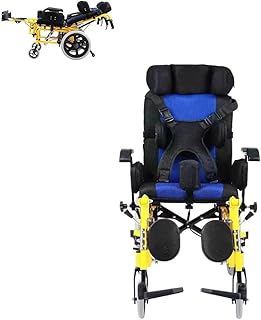
- Using a motorized wheelchair to assist mobility.
- Using communication aids like a computer with a talker device to help with talking.
These supports enhance both mobility and communication, enabling Sarah to:
- Attend school, learn, and make friends.
- Play and engage in age-appropriate activities.
Participation in school and community helps improve:
- Independence
- Body function
- Self-confidence
- Self-esteem
Increased independence contributes to a better quality of life for Sarah and her family.
Further Learning:
The video suggests watching the next module on contextual factors to learn more about increasing a child’s participation at home and in the community.
Key Points and Methodology
- Understand the difference between activity (task completion) and participation (involvement in life situations).
- Recognize how impairments in body structure and function (such as in cerebral palsy) lead to activity limitations and participation restrictions.
- Identify practical supports and interventions to promote activity and participation, including:
- Mobility aids (e.g., motorized wheelchair)
- Communication aids (e.g., computer-based talker)
- Therapy to enhance mobility and communication skills
- Encourage participation in school and community life to improve independence and psychosocial outcomes.
- Use participation as a means to potentially improve physical functions and overall quality of life.
- Explore contextual factors that influence participation for further strategies.
Speakers and Sources Featured
- The video features a narrator explaining concepts from the International Classification of Functioning, Disability and Health (ICF) framework.
- The example of Sarah, a child with cerebral palsy, is used as a case study to illustrate the concepts.
- No other specific speakers or experts are identified in the subtitles.
Category
Educational
Share this summary


Featured Products


Is the summary off?
If you think the summary is inaccurate, you can reprocess it with the latest model.